


Parental leave for employers: how to use your chance for sustainable employer branding
Last updated: 21. October 2026
Many companies still view parental leave as an organisational challenge. But instead of seeing it as mere absence, parental leave can be used as a strategic opportunity – especially in employer branding. Companies that actively support their employees in this phase of life position themselves as attractive employers and benefit in the long term from stronger employee retention and a positive external image.
The key points at a glance
- Family-friendliness and a healthy work-life balance are very important, especially to the younger generation
- Companies achieve advantages through lived family-friendliness, such as higher employee retention and more productive employees
- Employers can use parental leave as an opportunity for themselves through concrete measures
- these measures include, for example, open communication or flexibility
Contents:
Parental leave for employers: a success factor in employer branding
Family-friendliness is long since no longer a “nice-to-have” but a decisive competitive factor in the battle for talent. Studies show that applicants specifically look for companies that support a healthy work-life balance. The handling of parental leave plays a central role in this.
More and more professionals – particularly from Generation Y and Z – value things like work-life balance, appreciation and flexibility. Companies that make clear offers here stand out in the competition. Parental leave is an important touchstone: is it merely “tolerated” or actively supported? The difference has a direct effect on employer branding.
The advantages of family-friendly companies
✅ Higher employee retention:
Those who feel supported during parental leave are more likely to stay loyal to the company. Employees experience that their employer stands by them even in personal phases of life. This emotional bond often weighs more heavily than monetary incentives.
✅ A better employer brand:
A family-friendly company culture improves the image and attracts talent. Positive testimonials spread – not only internally, but also on review platforms like Kununu or Glassdoor.
✅ Increased return rate:
Flexible models make the return easier and secure know-how within the company. Especially in times of skilled-labour shortages, it's essential to keep experienced employees rather than seek and onboard new ones.
✅ More productive employees:
Satisfied employees are more engaged and more capable. Those who juggle work and family well are often more motivated, more goal-oriented and more resilient in everyday work. In addition, through their parenthood they bring new skills – you can read more about that on LinkedIn in a post by one of our founders, Stephie.

How employers can use parental leave as an opportunity
Early and open communication
Many uncertainties arise because parents don't know what to expect during and after parental leave. Companies should therefore communicate proactively:
- What options are there during and after parental leave?
- Which contact persons support parents in the company?
- How flexibly can the return be arranged?
This communication shouldn't start only shortly before maternity protection or the birth. Ideally, there are standardised but still individually adaptable processes. This creates security – and the confidence that one won't be “forgotten” once on parental leave.
Regular contact offers during parental leave – for example through invitations to team meetings or summer parties – signal appreciation and help maintain the connection to the company.
Foster parent-friendly leadership
Managers play a decisive role in how supported people on parental leave feel. Training and guides help managers handle the topic professionally and find individual solutions for their team.
It's not only about knowledge of the legal framework, but above all about attitude. How are parents considered in planning? Are career goals still pursued after parental leave? Can managers develop individual handover models? A parent-friendly manager can achieve a lot through empathy and flexibility – for the individual and for the company culture as a whole.
Best practices and success stories should be actively shared. This creates a learning organisation in which leadership is not just administered but shaped. In our whitepapers you'll find concrete information and support!
Enable flexibility on return
Not everyone returns to full-time directly after parental leave. Companies that offer part-time models, remote work or job sharing make the return more attractive. This way, valuable expertise is retained.
Flexible models prevent professionals from leaving the company because rigid structures don't allow for work-life balance. A well-planned, individual return – for example with staggered hours or fixed-term project work – can ease the transition.
Digital tools and modern working methods now allow for more flexibility. It's important that HR teams and managers find solutions together – without fear of losing control, but with the goal of keeping employees in the company long-term. Our digital parental leave manager can be a big help here. Here you'll find more information about it!
Strengthen internal role models
Companies that foster internal role models show that parental leave and a career are compatible. Managers can be role models themselves, or actively communicate these positive examples to break down prejudices and give courage.
Because often it's not the rules that deter – but the lived practice. When employees see that parental leave is possible in leadership positions or that returners lead exciting projects, the company culture changes sustainably.
Helpful, for example, are:
✅ internal “parent networks”
✅ experience reports on the intranet
✅ exchange formats like lunch & learn
✅ mentoring programmes for returners
This creates a supportive environment in which parents aren't left alone with their questions. In addition, relationships between employees generally improve – more cohesion emerges.
Make parental leave visible externally as part of the company culture
Whether via careers websites, social media or internal communication – positive examples of employees who have taken parental leave and successfully returned to the company strengthen employer branding.
It's not about self-promotion, but about authenticity: real stories, real faces, real experiences. A photo series on LinkedIn, a short interview on the careers page or a behind-the-scenes post about flexible teams – all of this shows that family-friendliness is more than a buzzword. You'll find more detailed tips on how to make the communication of family-friendliness a success in this blog article of ours.
Important: communication shouldn't focus only on mothers. When fathers also take parental leave and talk about it, a comprehensive, modern picture of work-life balance emerges.
Conclusion: parental leave as a strategic advantage
Companies that actively use parental leave as an opportunity for sustainable employer branding benefit from stronger employee retention and better positioning in the labour market. A family-friendly culture not only makes employers more attractive but also contributes to a satisfied and productive workforce.
Those who want to position themselves as a modern company should therefore not only fulfil legal obligations but understand parental leave as a strategic instrument – for a future-oriented, sustainable employer brand. In the long run, everyone wins: employees feel valued, teams stay stable, talent is attracted – and companies position themselves as credibly modern employers in a working world that is changing.
If you want to learn more about family-friendliness and its concrete implementation, feel free to read our Whitepaper, subscribe to our Newsletter or write us an email directly! You can reach us at info@heyguide.eu .
Feel free to share this post with others:
More posts

Parental leave as a manager: what changes and how to make it work
Elternzeit als Führungskraft – was auf dem Spiel steht und wie ihr euch als Unternehmen vorbereitet.
Read now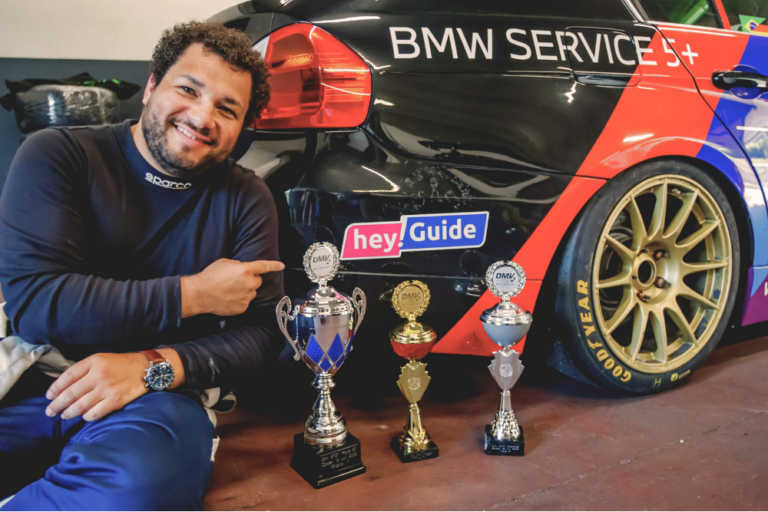
Warum unser Logo auf einem Rennwagen klebt – und was Motorsport mit Lebensphasen zu tun hat.
Read now
Family start leave isn't coming for now – what employers can do themselves
Paid family start leave isn't coming for now – what employers can do themselves.
Read now